TESTIMONIALS
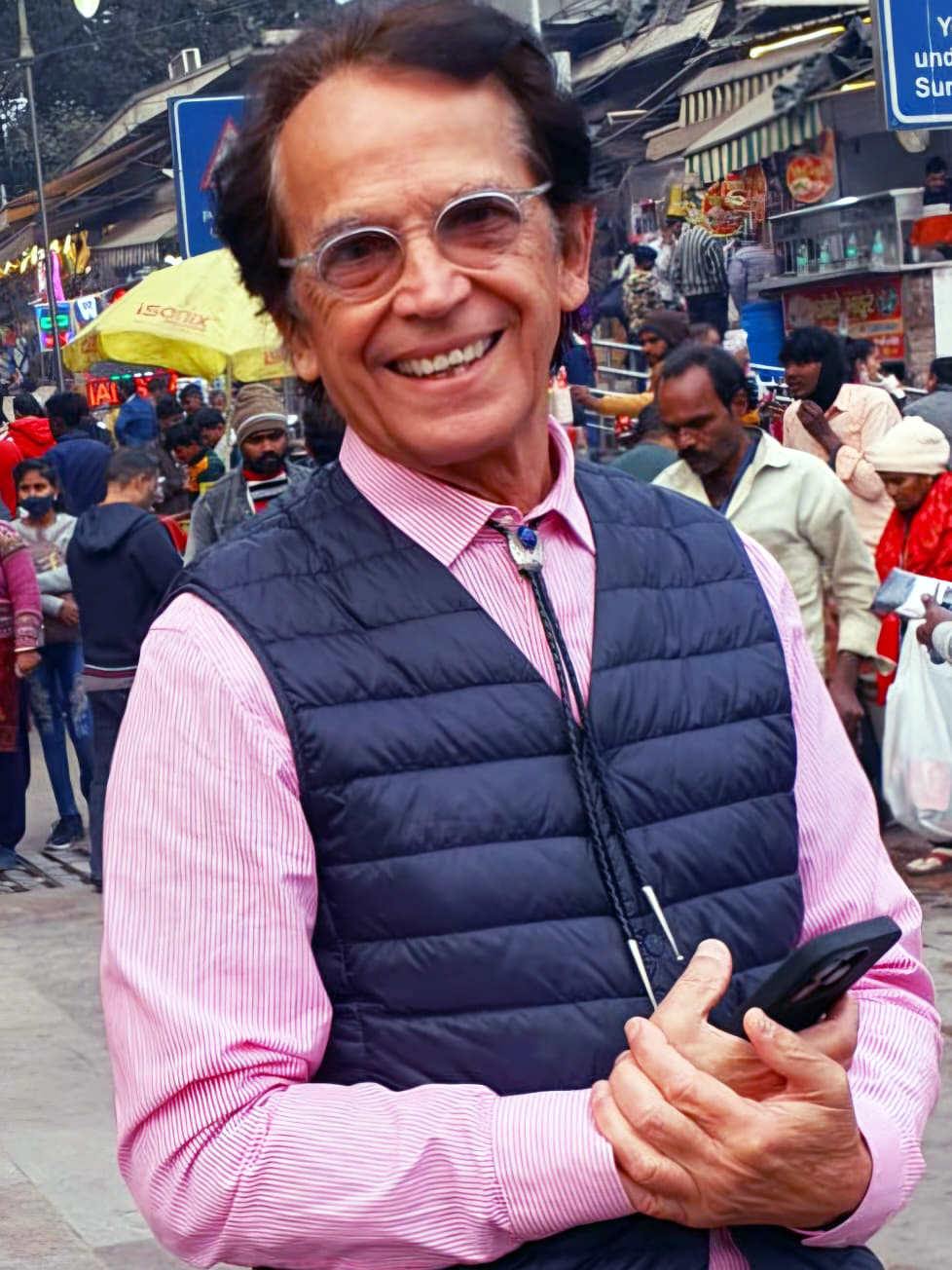
By Jean-Pierre de Faucigny-Lucinge
Gallerist, art critic and curator
Giving a contemporary edge to ancient art
I have travelled to India on several occasions. Over the course of my journeys, I visited numerous temples, both Hindu and Buddhist. I’ve taken ample time to contemplate on the extraordinary profusion of sculptures that have adorned the temples for over two millennia, some dating back nearly three centuries Before the Common Era (BCE). Each more fascinating than the last, these stone figures, frozen for eternity, profoundly captured my imagination. They remain etched in my memory to this very day.
I recently discovered the works of the painter Seemanthini. Viewing them through a lens shaped by the European pictorial tradition, and more specifically by the great masters of classical French painting.
What a revelation!
What a source of wonder!
Suddenly, I found myself face-to-face with the very gods and demigods I had once admired in situ, in their sculpted forms. They were no longer merely cold stone effigies; they seemed to have sprung back to life before my very eyes. Bathed in a mystical light and enveloped in vibrant, shimmering colours, their figures came alive beneath the artist’s brush, thanks to a subtle interplay of light and shadow. This masterful alchemy imbues each face with a striking presence, an almost palpable intensity that stirs the emotions. At times, it even sends a shiver down the spine.
Much like the great Western masters who laboured in their studios before living models, tirelessly striving to capture the perfect expression, the inner spirit, and the truth within a gaze, Seemanthini appears to have embarked upon a comparable quest. She demonstrates remarkable patience and rare sensitivity. She observes every minute detail of these ancestral sculptures, their postures, their gestures, their silent expressions. Then, through the magic of her art, she transforms these cold, motionless mineral forms into a presence vibrant with life.
Yet, her work transcends the mere pursuit of realism. In her paintings, the way Seemanthini reconstructs what is manifestly realism, it diverts the viewer’s gaze, shifting it from the eye to the imagination. Her artwork attains a dimension that is both spiritual and almost cosmic. The divinities she depicts seem to emerge from a timeless space where the visible and the invisible converge. In their presence, the viewer is invited to transcend the boundaries of reality and enter a universe of wisdom, serenity, and contemplation. An atmosphere of fullness and tranquillity emanates from her paintings, as if the gods themselves were coming to meet us to remind us of the sacred spark that dwells within each of us.