ARTWORK

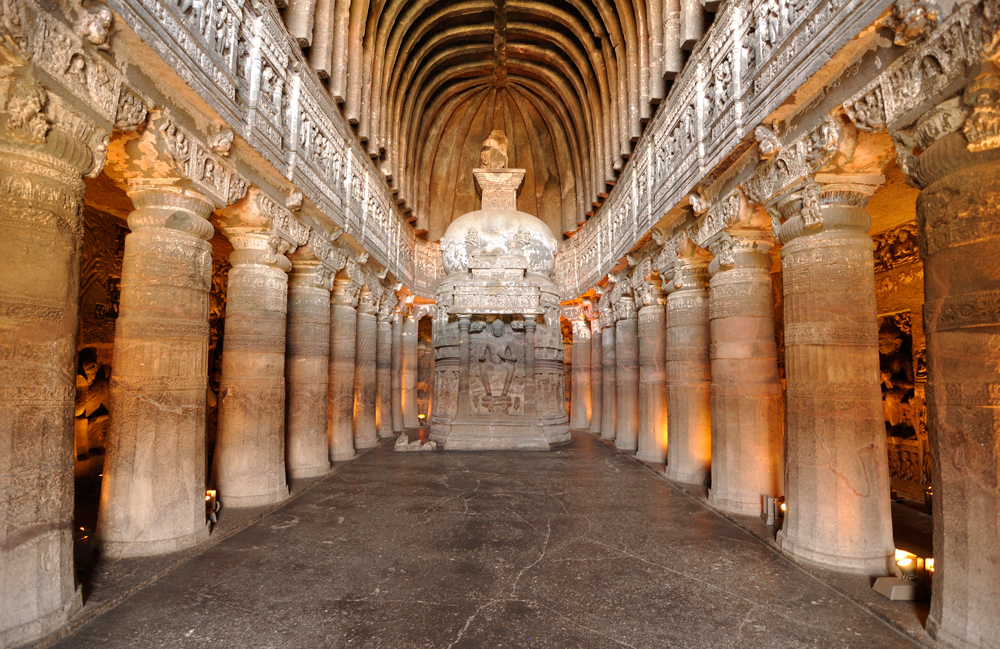
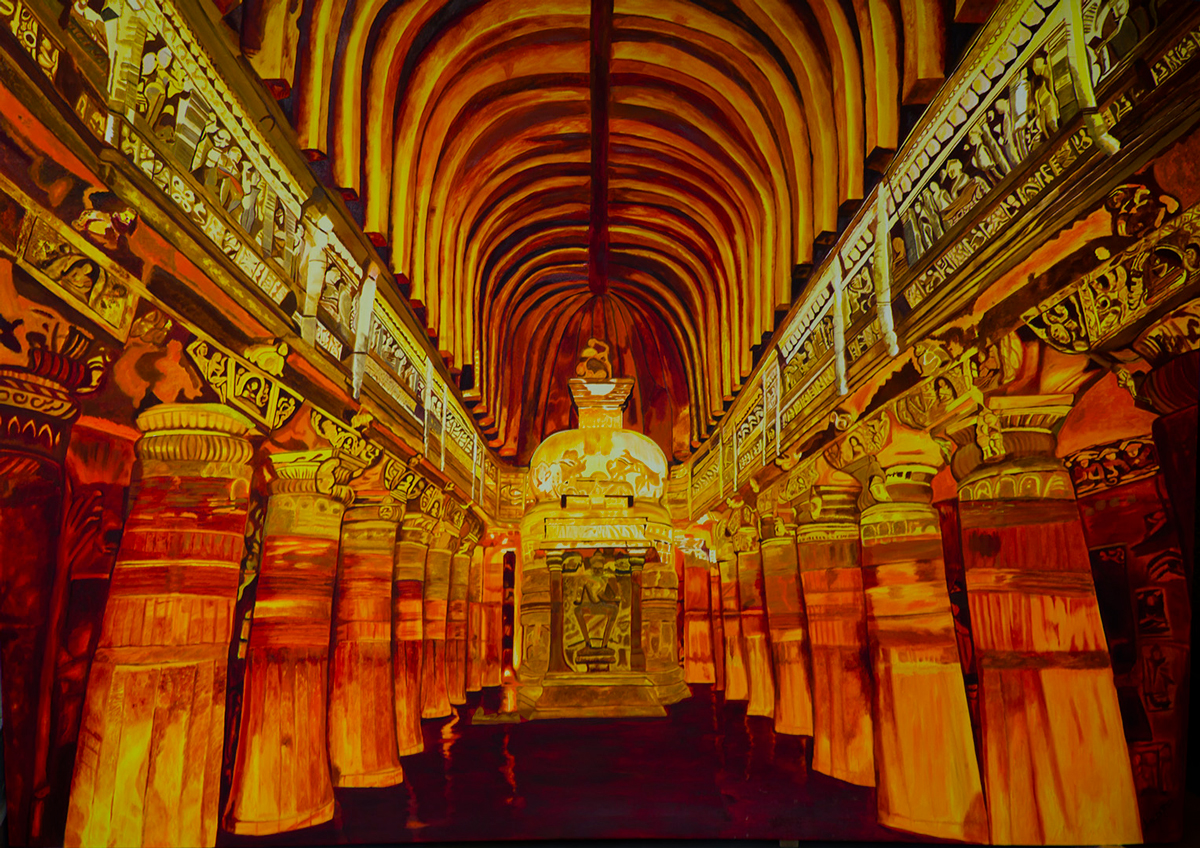
Reconstructed Chaityalaya
Oil on canvas, 210 x 150 cms
Style: Reconstruct Realism
Painter: Seemanthini

A 2nd century BCE, stone caves of Ajanta, Maharashtra, India.

Historical mythological importance- Chaityas are large horseshoe shaped stone chambers with a large Stupa, intricate carvings and frescos

Reconstructed Hampi Ganesha
Oil on canvas, 210 x 150 cms
Style: Reconstruct Realism
Painter: Seemanthini

A 13th-15th CE sandstone sculpture from Hampi, Karnataka, India.

Mythological importance, Ganesha, the god of obstruction remover, with motion of multiple arms frozen mid-gesture flowing down to his both feet.
 

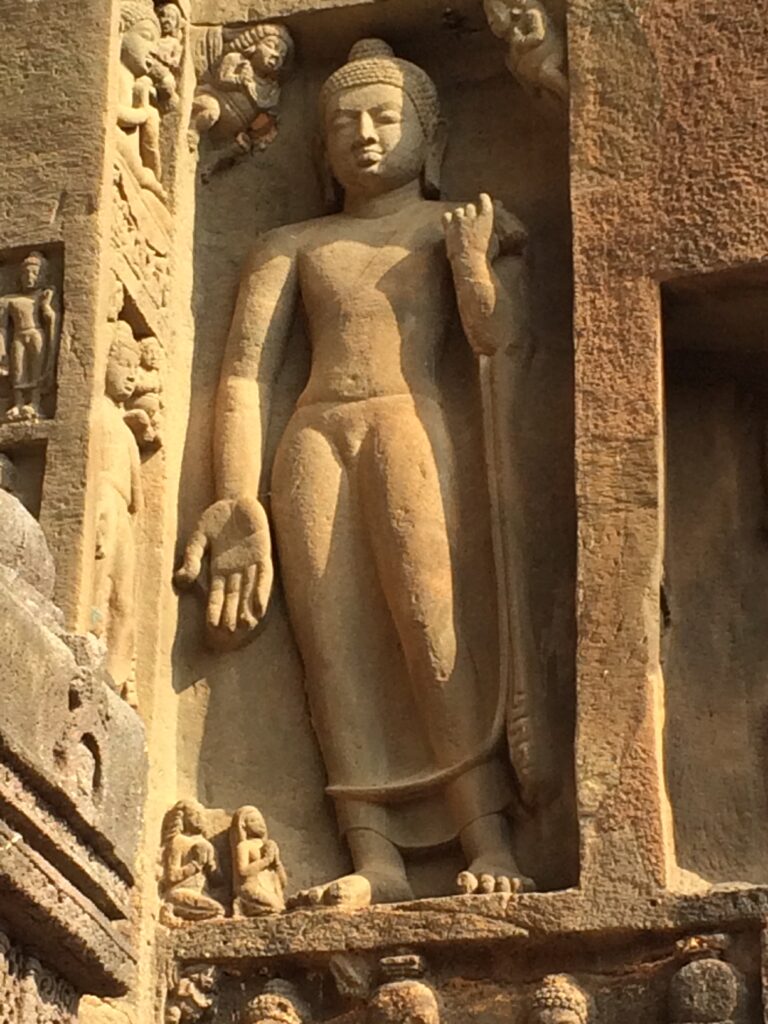
Reconstructed The Silent Assurance
Oil on canvas, 210 x 150 cms
Style: Reconstruct Realism
Painter: Seemanthini

A 3rd-5th Century BCE Ajanta caves, Maharashtra, India

Historical mythological importance – Buddha’s large right hand depicting assurance to his followers.
 

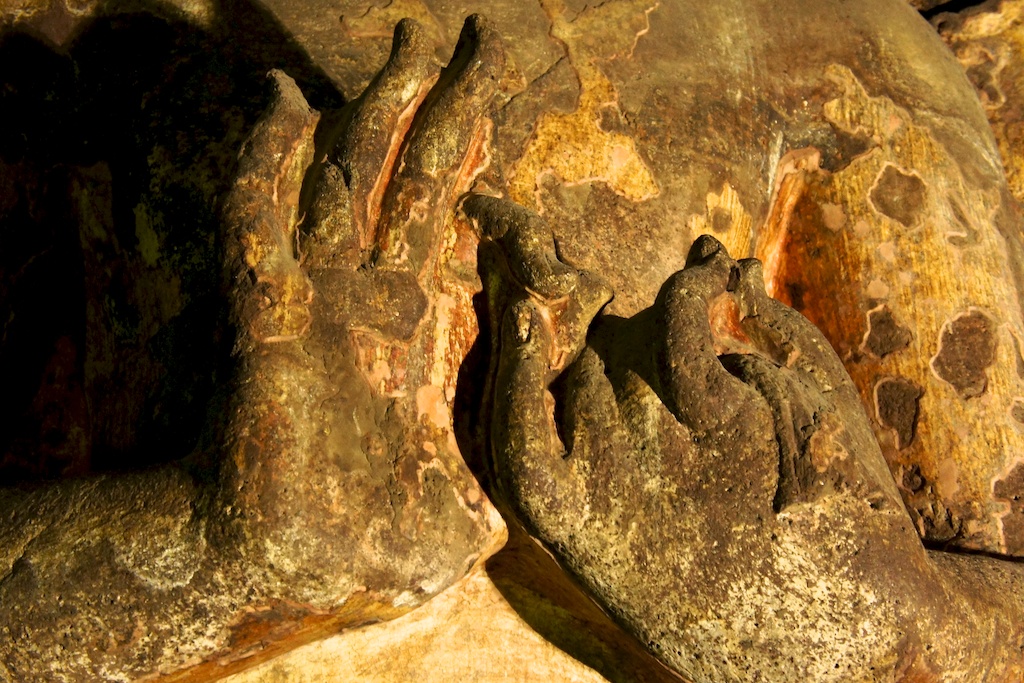
Reconstructed Dharmachakra mudra
Oil on canvas, 210 x 150 cms
Style: Reconstruct Realism
Painter: Seemanthini

A 2nd Century BCE Buddha sculpture, from Cave 3, Ajanta, Maharashtra, India.

Historical and mythological importance – the teaching hand gesture also known as Dharmachakra, takes the followers from darkness to wisdom of light.
 

Reconstructed Devadatta Apsara
Oil on canvas, 150 x 90 cms
Style: Reconstruct Realism
Painter: Seemanthini

A Gandhara style sandstone sculpture, 1st to 5th BCE

A Gandhara style sandstone sculpture, 1st to 5th BCE, a Greco-Budhist fusion with intricate jewellary.

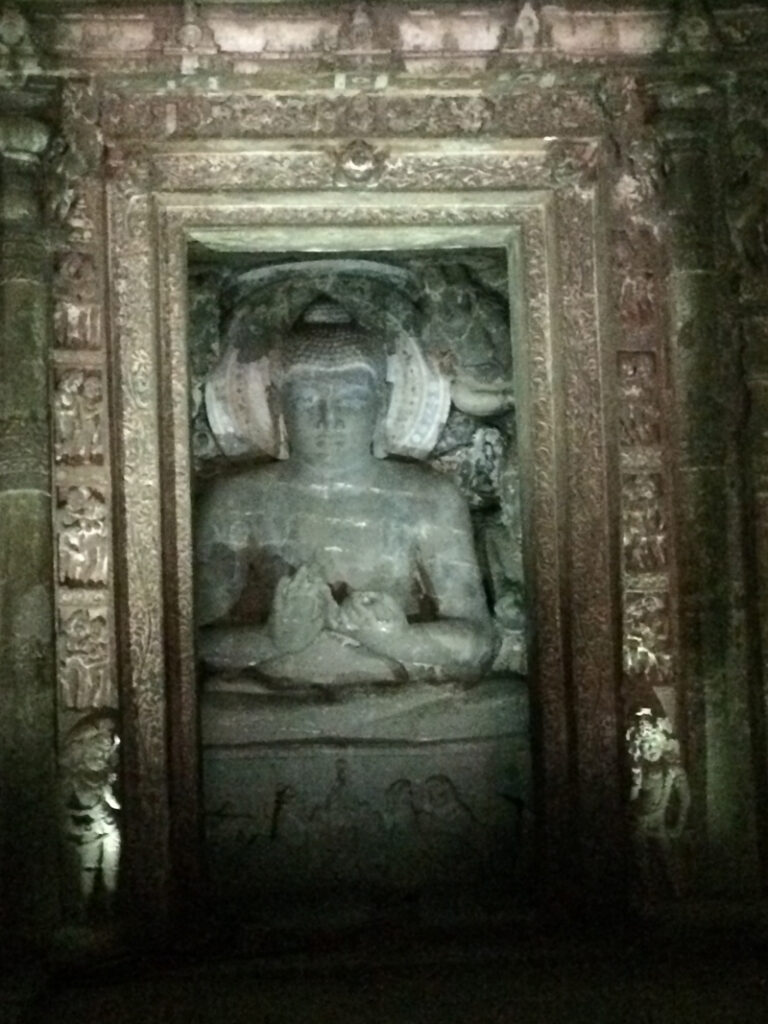
Reconstructed The Cave 1
Oil on canvas, 240 x 210 cms
Style: Reconstruct Realism
Painter: Seemanthini

A 2nd Century BCE Buddha sculpture, from Cave 3, Ajanta, Maharashtra, India.

Historical and mythological importance – the teaching hand gesture also known as Dharmachakra, takes the followers from darkness to wisdom of light.
 

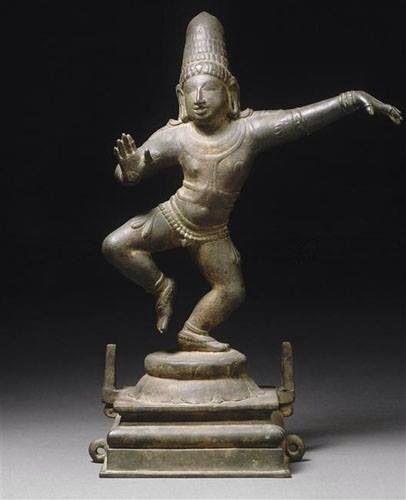
Reconstructed Dancing Krishna
Oil on canvas, 300 x 300 cms
Style: Reconstruct Realism
Painter: Seemanthini

A Gandhara style sandstone sculpture, 1st to 5th BCE

A Gandhara style sandstone sculpture, 1st to 5th BCE, a Greco-Budhist fusion with intricate jewellary.

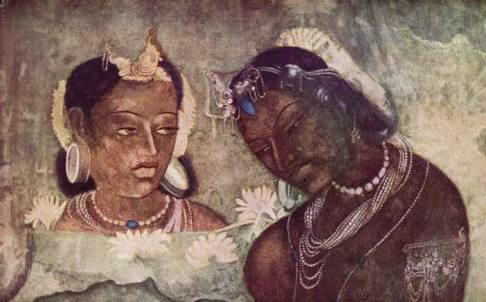
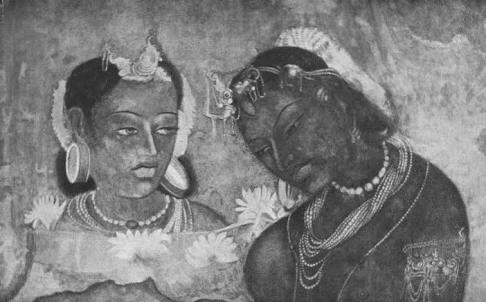
Reconstructed The Black Princess
Oil on canvas, 300 x 300 cms
Style: Reconstruct Realism
Painter: Seemanthini

5th Centurey CE fresco

The Black princess, a 5th century CE fresco, is unique as the original fresco is completely faded out of the wall. Her skin tone is deep brown with fine jewellery, well done hair indicating noble status, a rare Indian dark beauty.
chaityalaya
A 2nd century BCE, stone caves of Ajanta, Maharashtra, India.

Historical mythological importance- Chaityas are large horseshoe shaped stone chambers with a large Stupa, intricate carvings and frescos.
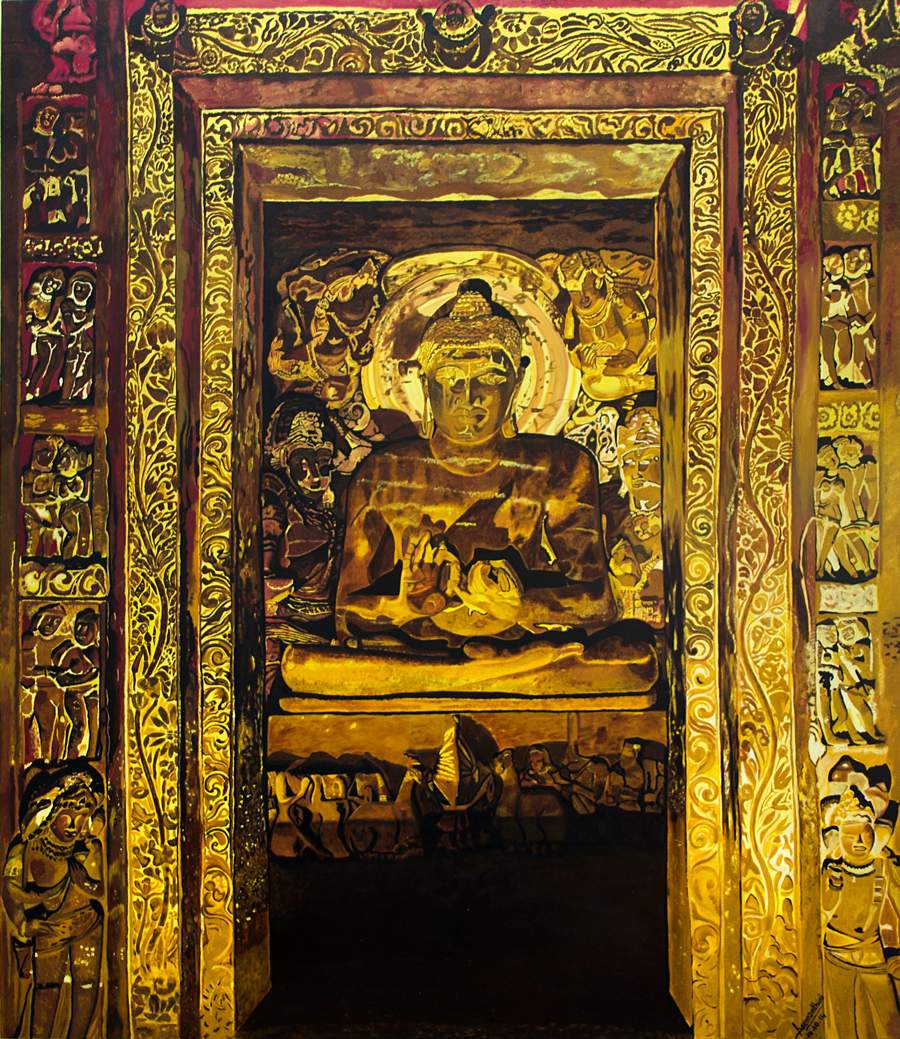
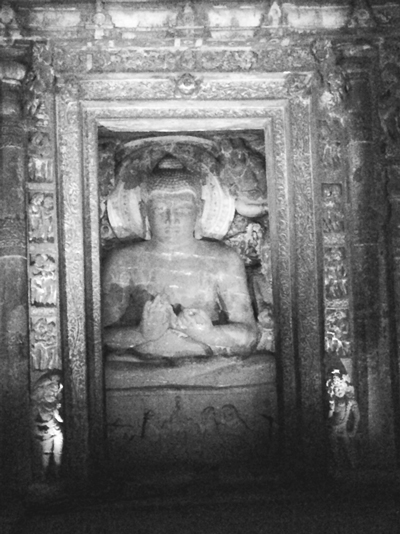
Reconstructed Chaityalaya - Oil on canvas, 210 x 150 cms
View Ancient Original
Cave 1
5th century CE, sandstone carved calm compassionate Buddha

Historical and Mythological Importance - 5th century CE, carved in sandstone, with calm compassionate Budha with Avalokiteshwara on the left side and Vajrapani on right side of the adjacent wall, along with devotee couples and celestial figures above Buddha.
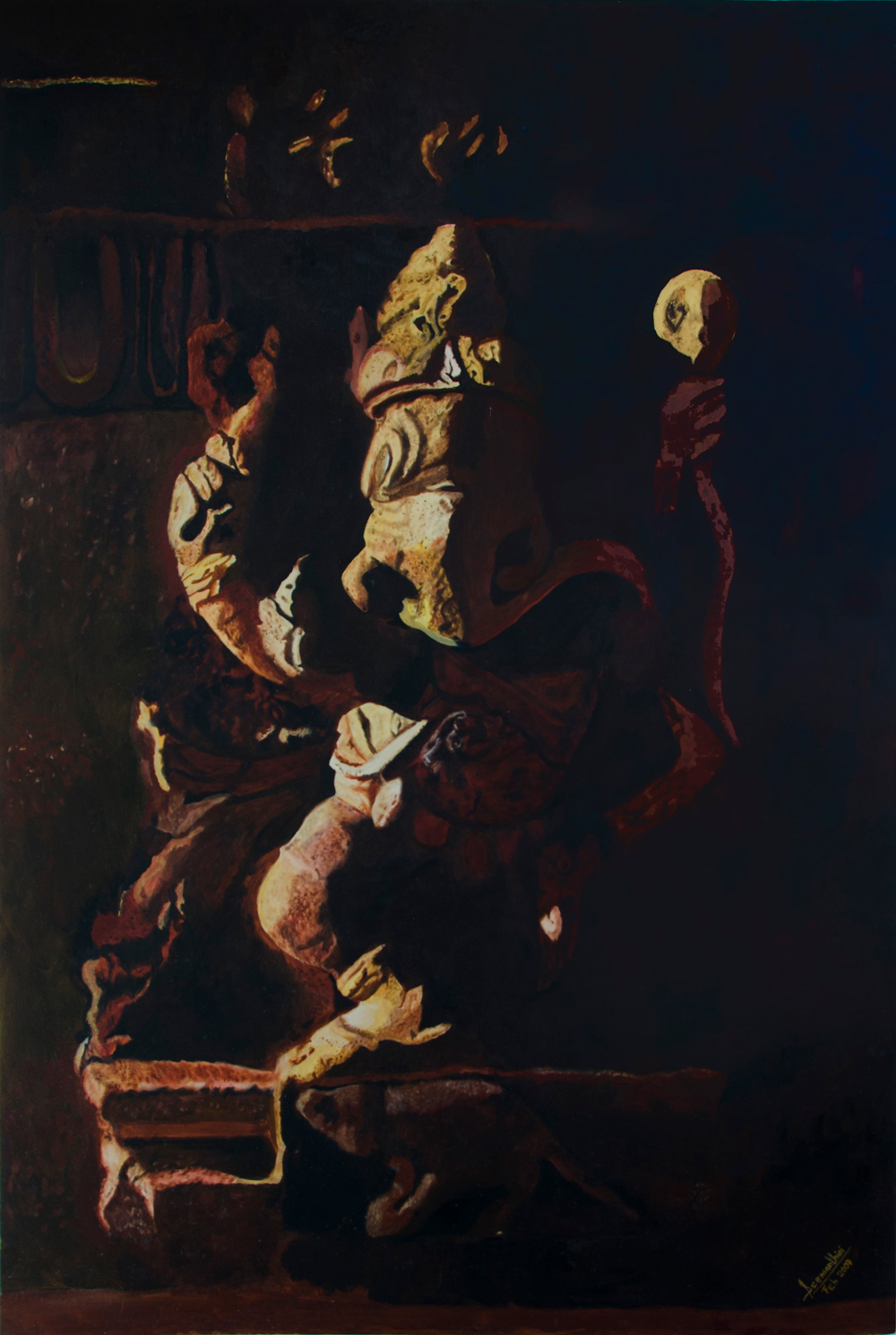
Reconstructed The Cave 1 - Oil on canvas, 240 x 210 cms
View Original
Reconstructed-hampi-ganesha
A 13th-15th CE sandstone sculpture from Hampi, Karnataka, India.

Mythological importance, Ganesha, the god of obstruction remover, with motion of multiple arms frozen mid-gesture flowing down to his both feet.
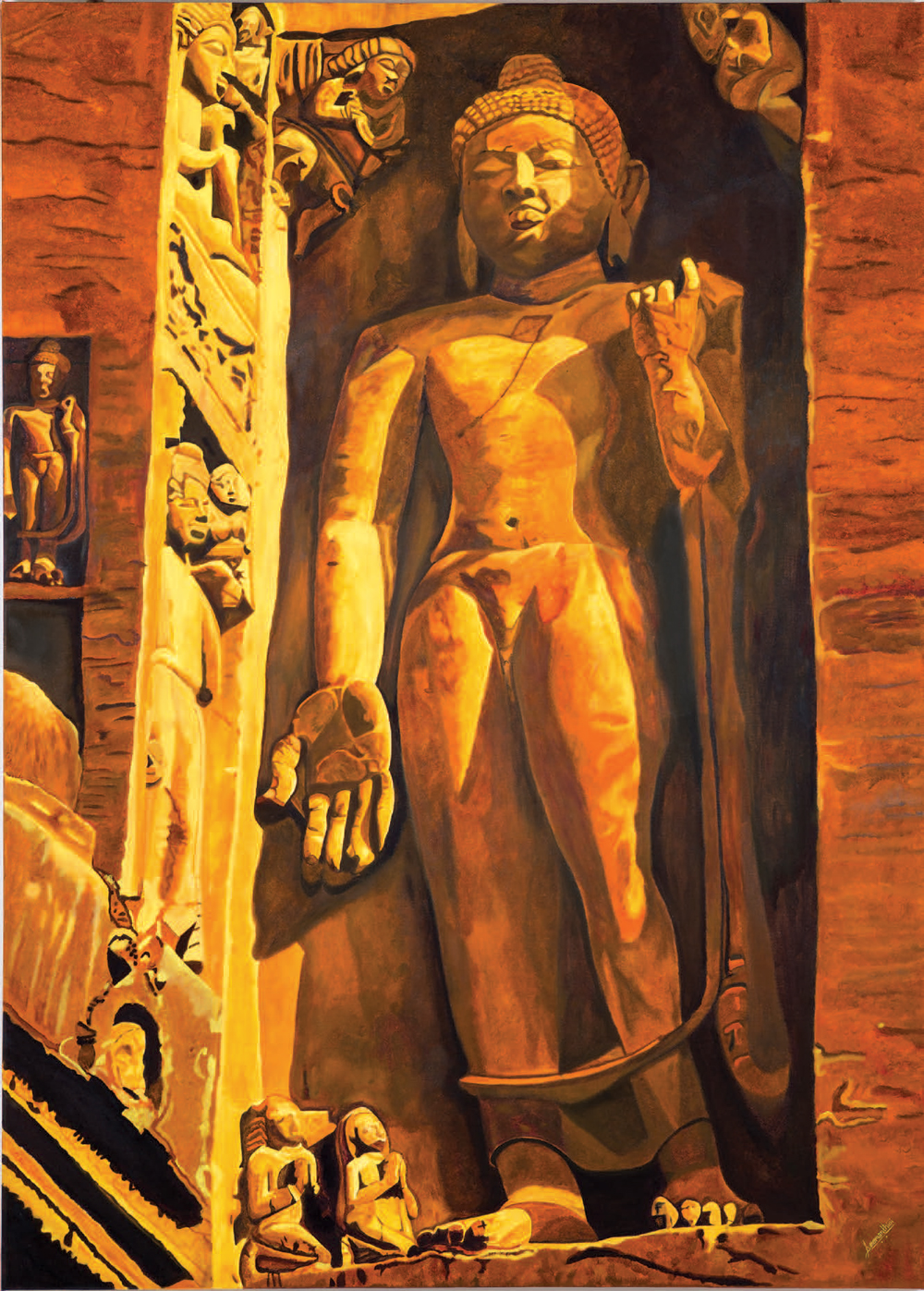
Reconstructed Hampi Ganesha - Oil on canvas, 210 x 150 cms
View Ancient Original
Silent assurance
A 3rd-5th Century BCE Ajanta caves, Maharashtra, India

Historical mythological importance – Buddha’s large right hand depicting assurance to his followers.
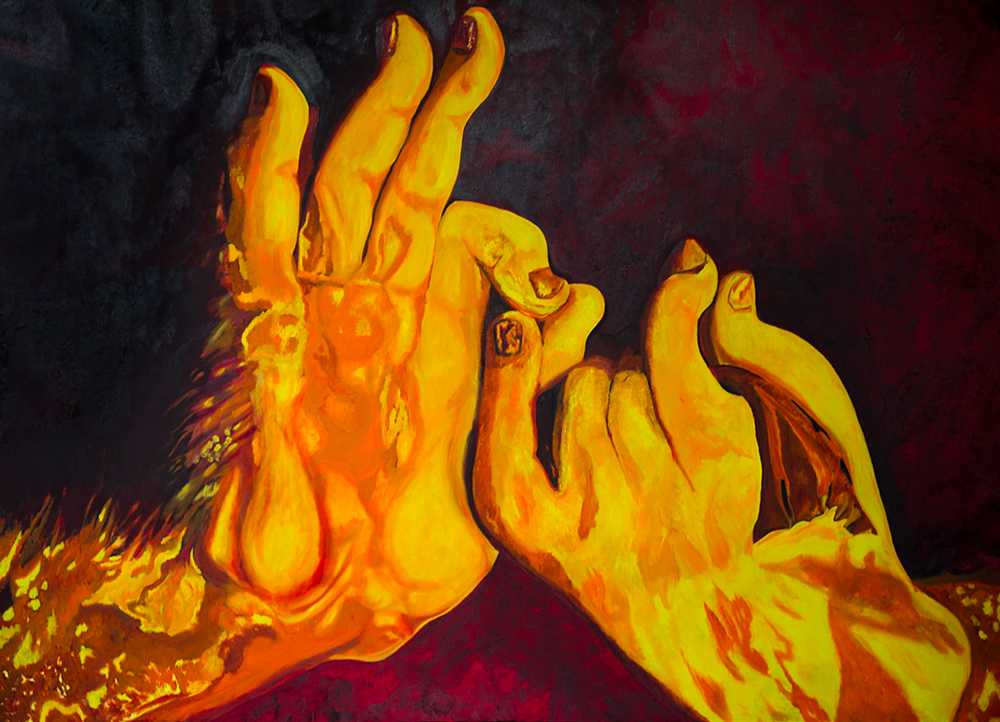
Reconstructed The Silent Assurance - Oil on canvas, 210 x 150 cms
View Ancient Original
dharma chakra
A 2nd Century BCE Buddha sculpture, from Cave 3, Ajanta, Maharashtra, India.

Historical and mythological importance – the teaching hand gesture also known as Dharmachakra, takes the followers from darkness to wisdom of light.
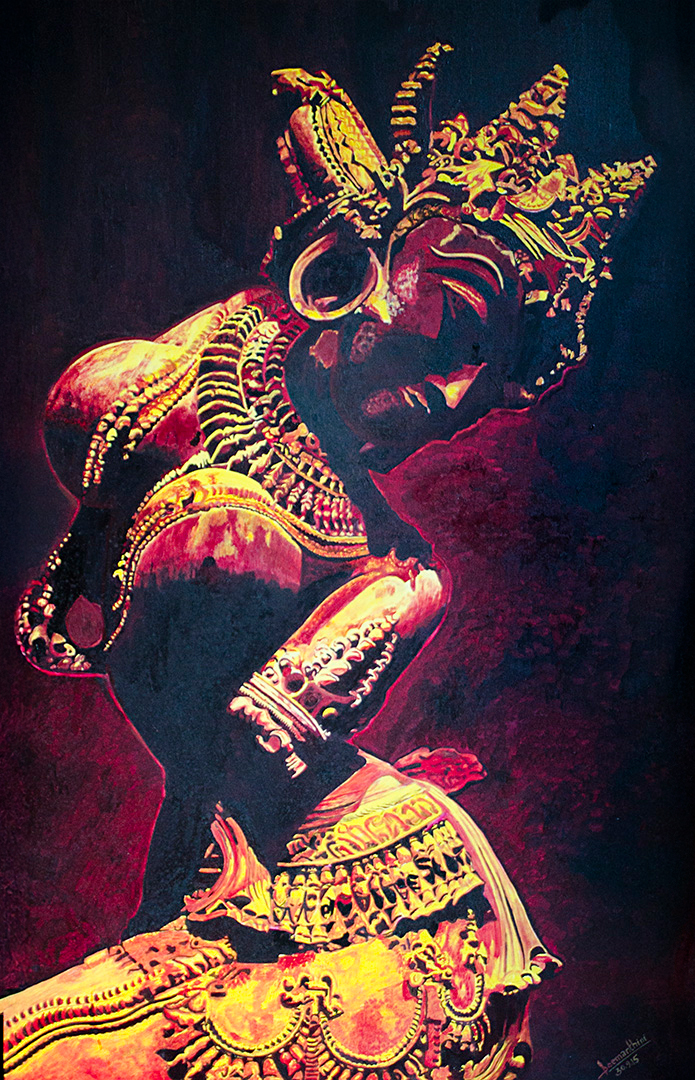
Reconstructed Dharmachakra mudra - Oil on canvas, 210 x 150 cms
View Ancient Original
Apsara
A Gandhara style sandstone sculpture, 1st to 5th BCE

A Gandhara style sandstone sculpture, 1st to 5th BCE, a Greco-Budhist fusion with intricate jewellary.
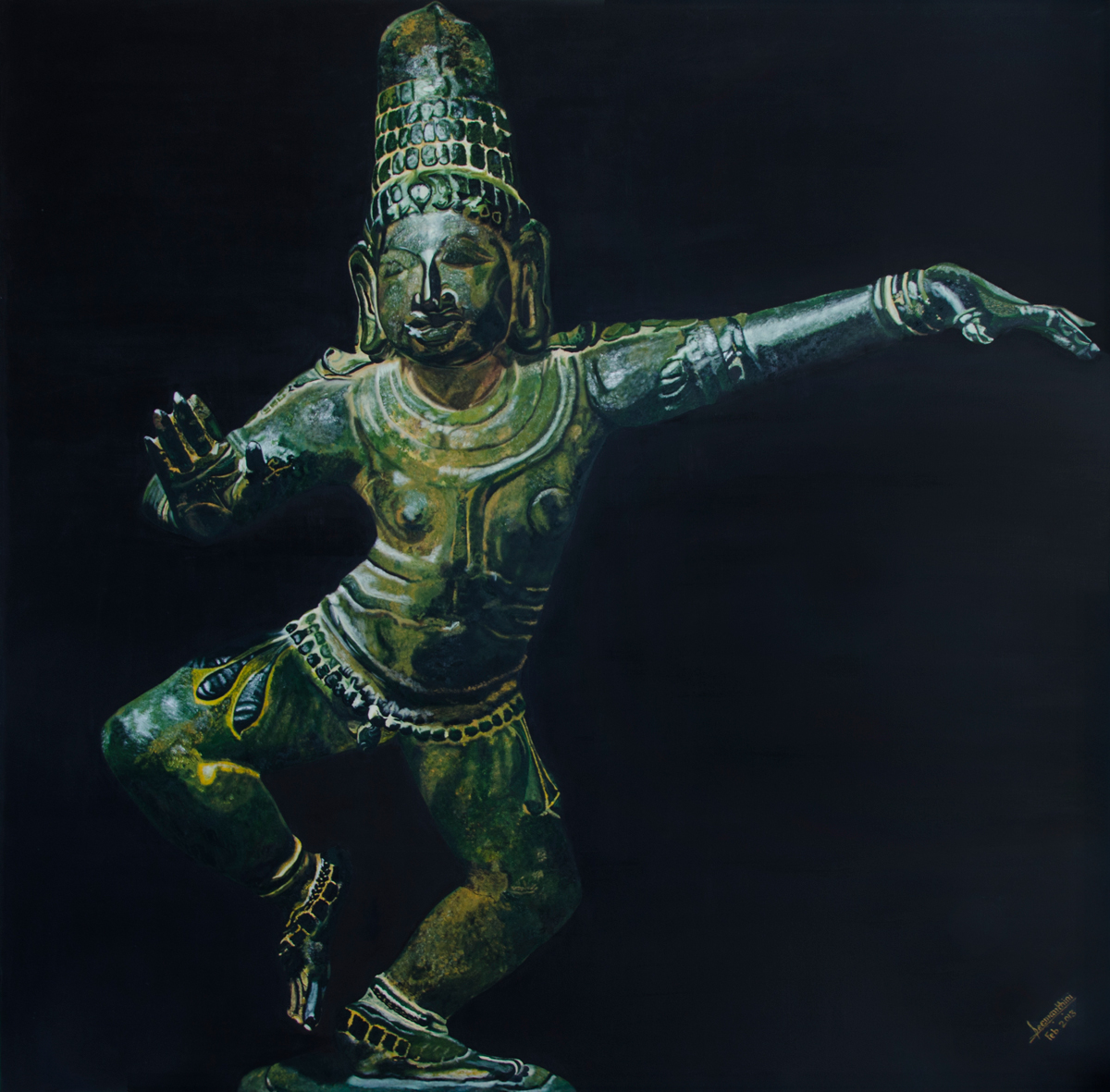
Reconstructed Devadatta Apsara - Oil on canvas, 150 x 90 cms
View Original
Dancing krishna
11 th to 12 th century CE, Chola period, bronze sculpture

Historical importance - 11 th to 12 th century CE, Chola period, bronze sculpture, Krishna asa child in dancing posture and detailed ornaments.
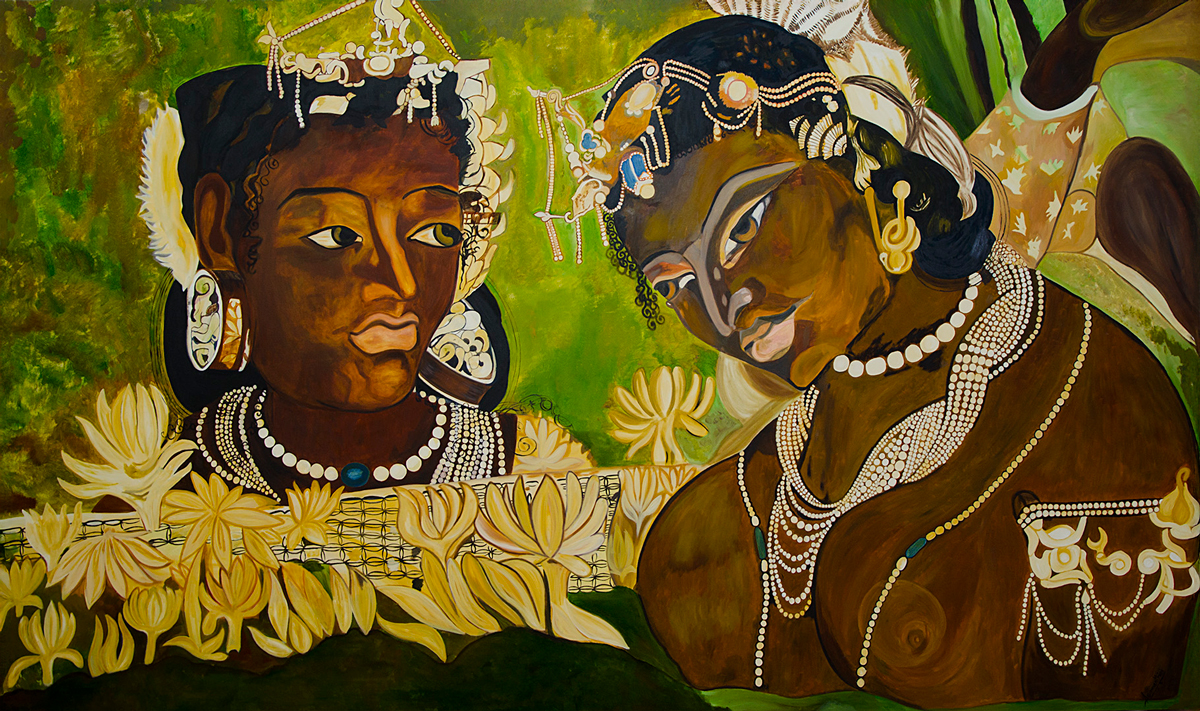
Reconstructed Dancing Krishna - Oil on canvas, 300 x 300 cms
View Original
Black Princess
5th Centurey CE fresco

Historic importance- The Black princess, a 5th century CE fresco, is unique as the original fresco is completely faded out of the wall. Her skin tone is deep brown with fine jewellery, well done hair indicating noble status, a rare Indian dark beauty.

Reconstructed The Black Princess - Oil on canvas, 300 x 210 cms
View Original
previous arrow
next arrow
chaityalaya
Cave 1
Reconstructed-hampi-ganesha
Silent assurance
dharma chakra
Apsara
Dancing krishna
Black Princess
previous arrow
next arrow